
RNA interference (RNAi) is a conserved gene regulatory mechanism in which small RNAs (sRNAs) mediate sequence-specific control of gene expression. In plants, RNAi plays fundamental roles in development, stress adaptation, genome stability, immunity, and molecular communication with interacting organisms.
Our laboratory investigates the molecular mechanisms and biotechnological applications of RNAi in plants and plant-associated microorganisms, integrating expertise in small RNA biology, RNA-directed DNA methylation, epigenetics and epitranscriptomics.
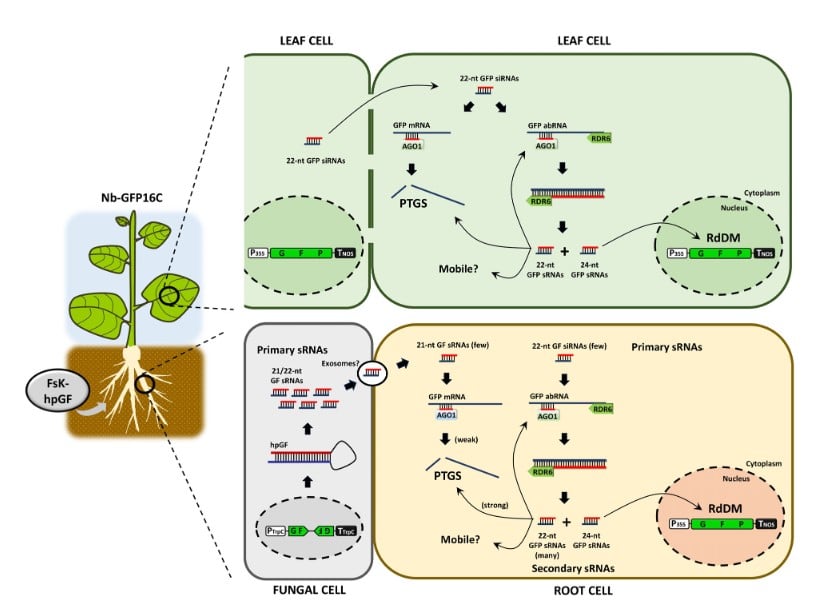
Our basic research explores how sRNAs shape plant development and mediate bidirectional cross-kingdom RNA interference (ck-RNAi) between plants and associated microorganisms. We study the molecular basis of systemic RNAi, including the role of host factors such as RDR6 in silencing amplification and spread, the interplay between RNA-directed DNA methylation and self-reinforcing RNAi pathways, and the function of extracellular vesicles (EVs) as RNA carriers during cross-kingdom communication. We further investigate how epigenetic and epitranscriptomic plasticity in both hosts and microbes influences mutualistic and pathogenic interactions.
Our research combines advanced molecular and multi-omics approaches to dissect RNAi, epigenetic and epitranscriptomic regulation. We integrate small RNA-seq, RNA-seq and degradome sequencing with whole-genome bisulfite sequencing for 5mC DNA methylation profiling and nanopore sequencing for m6A RNA modification analysis


Key figures that reflect the laboratory’s activity, scientific output and contribution to research and education.