
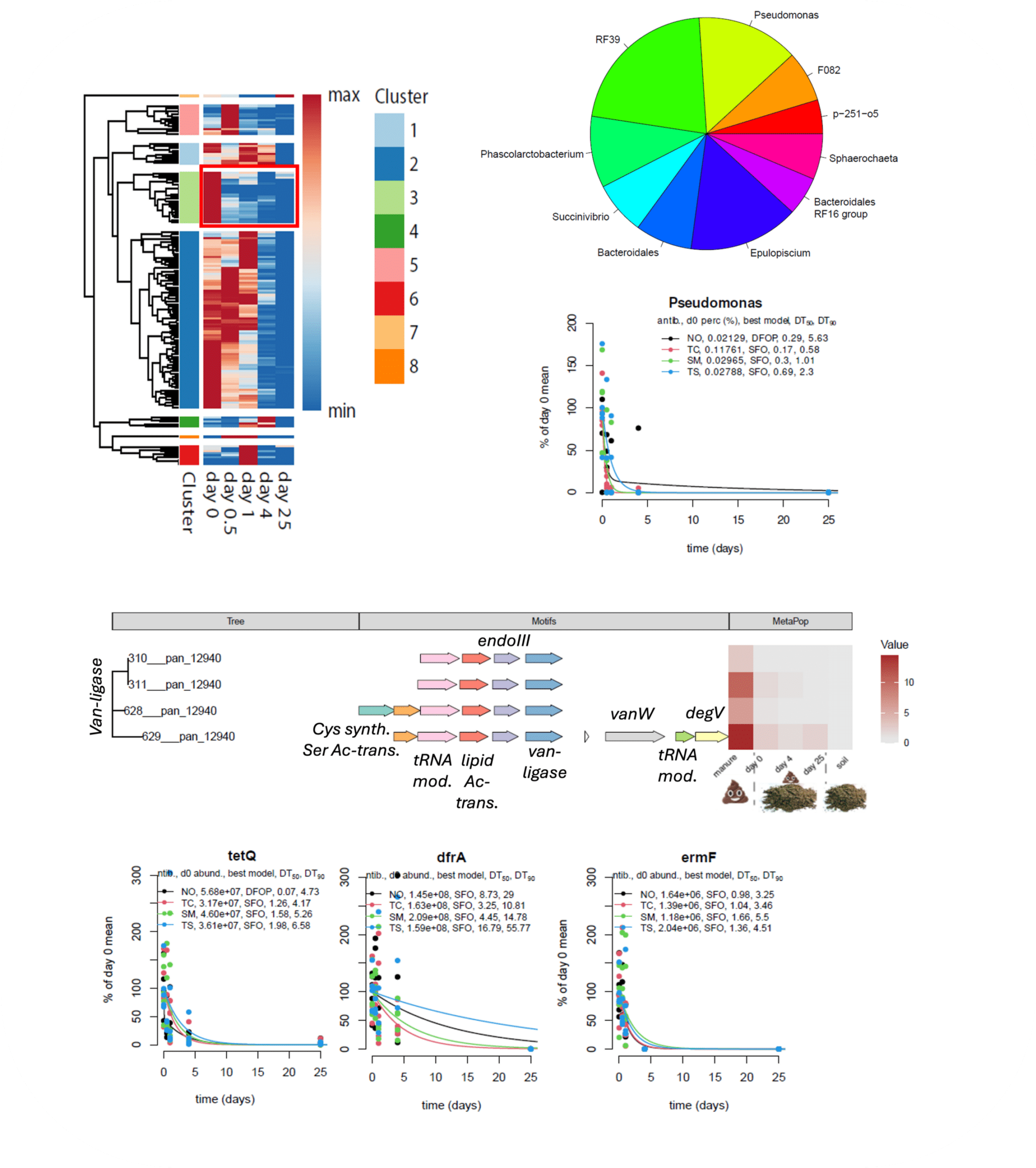
The spread of pathogens and antimicrobial resistance (AMR) represents a significant public health concern. While modern agricultural practices (such as manuring and the use of reclaimed water) offer clear benefits, they also increase the risk of pathogen and AMR dispersal. From production to post-harvest handling, these risks may ultimately affect consumers. We seek to understand the pathways and model the dynamics of pathogen and AMR dispersal across the farm-to-fork continuum, identifying sources and examining their interaction with environmental microbial communities under ecological constraints. To this end, we employ microcosm and mesocosm experiments to analyze microbial load, diversity, resistance markers, horizontal gene transfer markers, and the associated genomic background in soils, recycled water, and, plants and harvested products. Advanced techniques (including amplicon and shotgun metagenome sequencing, qPCR, immunomagnetic assays, and FISH/FACS) are employed to characterize microbial diversity and assess virulence and overall pathogenicicty potential. Selective pressure compounds (i.e. antibiotic residues), are quantified via HPLC and LC-MS/MS. Finally, computational models and risk assessment strategies developed within this context, are expected to enable the identification of critical control points and the creation of regulatory tools for safer agricultural production and post-harvest management.

Key figures that reflect the laboratory’s activity, scientific output and contribution to research and education.
